
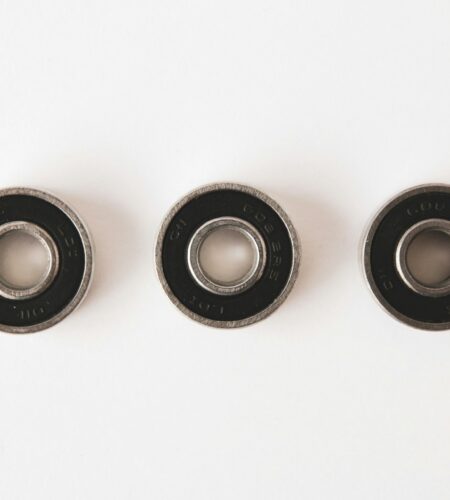
Machinery is only as reliable as its weakest component. In many industrial applications, that component is the humble ball bearing.
While they may seem like standard machinery parts, selecting the incorrect bearing can lead to catastrophic equipment failure, costly downtime, and safety hazards. Conversely, a well-chosen bearing ensures smooth operation, energy efficiency, and a long service life.
Engineers and maintenance managers must navigate a complex array of variables when specifying bearings. It is rarely a “one size fits all” scenario.
From the loads they carry to the environment they operate in, every factor influences performance. This guide outlines the six critical areas to consider during the ball bearing selection process.
1. Analyzing Load Types and Capacities
The primary function of any bearing is to support a load while facilitating motion. Understanding the nature of this load is the first step in narrowing down options. Loads generally fall into two categories: radial and axial.
Radial Loads
Radial loads act perpendicularly to the shaft’s axis. Deep groove ball bearings are the most common choice here because they handle radial forces efficiently.
For heavy-duty applications, cylindrical roller bearings might be necessary, but for standard electric motors and pumps, a deep groove ball bearing usually suffices.
Axial (Thrust) Loads
Axial loads act parallel to the shaft’s axis. If a machine exerts significant force along the shaft—such as in a fan or a worm gear—the bearing must be designed to withstand that thrust. Angular contact ball bearings are specifically engineered to handle these forces.
Combined Loads
Many applications involve a mix of both radial and axial forces. In these scenarios, tapered roller bearings or angular contact bearings are often the superior choice.
Engineers must calculate the ratio of these loads to ensure the selected component can handle the combined stress without premature fatigue.
2. Determining Operating Speeds (RPM)
Speed capability is a defining characteristic of bearing performance. As rotational speed increases, so does friction and, consequently, heat. If a bearing operates beyond its thermal limits, the lubricant will degrade, leading to seizure.
Limiting Speeds
Every bearing has a “limiting speed” determined by its size, type, and cage material. Small ball bearings generally operate at higher speeds than larger roller bearings.
Manufacturers provide speed ratings in their catalogs, usually based on oil or grease lubrication.
Friction and Heat Generation
High-speed applications require bearings with low friction coefficients to minimize heat buildup.
Precision bearings with specific cage designs (such as phenolic or polyamide cages) are often employed in high-RPM machinery like spindles or turbines to maintain stability and reduce thermal expansion.
3. Assessing Environmental Conditions
The surroundings in which the machinery operates are just as important as the mechanical requirements. Machinery parts exposed to harsh elements require different specifications than those in a cleanroom.
Contamination Risks
Dust, dirt, water, and chemical vapors are the enemies of bearing longevity. For dirty environments, such as agricultural equipment or mining conveyors, seals are essential.
- Contact Seals: Provide the best protection against contaminants but generate more friction.
- Shields: Offer protection against large debris without contacting the inner ring, resulting in lower friction but less protection against fine dust or moisture.
Temperature Extremes
Standard bearings operate well within a specific temperature range. However, if the application involves industrial ovens or cryogenic pumps, standard steel and grease will fail.
Heat-stabilized steel and specialized high-temperature lubricants are necessary for extreme heat, while specific clearances are required to accommodate thermal expansion.
4. Lubrication Requirements
Lubrication reduces friction, dissipates heat, and prevents corrosion. The choice between grease and oil depends largely on the speed and maintenance accessibility of the application.
Grease Lubrication
Grease is used in the vast majority of rolling bearings. It is easy to retain within the bearing housing and provides sealing capabilities. Pre-greased, sealed bearings are a popular choice for “sealed-for-life” applications where maintenance access is difficult.
Oil Lubrication
Oil is preferred for high-speed or high-temperature applications where heat dissipation is critical.
Oil circulates through the bearing, carrying away heat more effectively than grease. However, oil systems require more complex sealing and housing designs to prevent leakage.
5. Precision and Tolerance Levels
Not all bearings are created equal. The precision of the manufacturing process affects the bearing’s running accuracy, noise level, and rotational speed.
ABEC Ratings
The Annular Bearing Engineering Committee (ABEC) scale rates tolerances. A higher ABEC number indicates tighter tolerances and greater precision.
- ABEC 1 and 3: Standard for most industrial applications, automotive parts, and electric motors.
- ABEC 5, 7, and 9: Required for high-precision instruments, aerospace applications, and high-speed spindles where runout must be minimal.
Noise and Vibration
In consumer appliances or medical equipment, noise reduction is a priority. Bearings with higher precision and super-finished raceways operate more quietly and with less vibration.
Selecting the right internal clearance (C3, C4, etc.) also plays a role in managing vibration under thermal stress.
6. Material Selection and Cage Types
While chrome steel (52100) is the industry standard, it is not suitable for every environment. Material science offers alternatives for specialized engineering tips and requirements.
Stainless Steel
For food processing or marine applications where moisture is prevalent, 440C stainless steel bearings prevent rust and corrosion. While they have a slightly lower load capacity than chrome steel, their oxidation resistance is vital for hygiene and longevity.
Hybrid Ceramic
Hybrid bearings use steel rings with ceramic balls (silicon nitride). These offer several advantages:
- Electrical Insulation: They prevent electrical arcing damage in variable frequency drives (VFDs).
- Higher Speeds: Ceramic balls are lighter and harder, generating less centrifugal force and heat.
- Durability: They are less susceptible to wear and can run with less lubrication.
Ensuring Long-Term Reliability
Proper ball bearing selection is a balancing act between load, speed, environment, and cost. By carefully evaluating these six factors, engineers can ensure that their machinery operates at peak efficiency.
Ignoring these parameters often leads to rapid component degradation, necessitating frequent replacements and halting production.
Whether designing a new system or replacing a worn component, taking the time to verify the specifications against the application’s needs is the most effective way to guarantee performance.
For those looking to browse a comprehensive catalog of high-quality industrial components, click here to view our latest inventory.
Subscribe to our email newsletter to get the latest posts delivered right to your email.